Southeast Asia is the most economically dynamic region in the world and over the years it has become a geopolitical hotspot. The competition between China and the United States mainly unfolds in the region. In the event of a future conflict, the two great powers have been trying to snatch up allies. This analysis attempts to give an overview of Southeast Asian countries’ strategic postures.
Southeast Asia stands in an ambiguous position with regards to the US-China confrontation. On the one hand, ASEAN members would like to integrate China in the regional architecture through a “constructive engagement.” On the other hand, Southeast Asian states feel that their security depends on the American presence in the region. Albeit these two patterns might have seemed compatible in the 1990s, today are certainly not. ASEAN countries are seeking for a solution that allows them to maintain a rather neutral posture and to build an environment suitable for a Sino-American balance of power. “Don’t make us choose” would be the slogan of Southeast Asian policymakers.
Logically, the more the U.S.-China competition exacerbates, the less ASEAN countries can retain their impartiality. Alarmed by the increasingly tense atmosphere, the ASEAN Foreign Ministers met for the 53rd anniversary of the creation of the institution and issued a Statement on the Importance of Maintaining Peace and Stability in Southeast Asia. Having noticed the “growing uncertainties” that may have “detrimental ramifications” for the region, they called for “maintaining Southeast Asia as a region of peace, security, neutrality and stability”; they underlined the importance of exercising self-restraint in activities that would otherwise escalate disputes and wreck peace and stability; they called for building mutual trust and confidence through “continued dialogue, win-win cooperation and practical confidence building measures”; they reiterated the concept of “ASEAN centrality” for promoting regional cooperation, mutual trust, mutual confidence, and mutual respect.
Apart from the desire to avoid the grim scenario of a great powers’ war waged near, or perhaps within the sub-region, Southeast Asian states are strongly committed to peace in order to abstain from taking sides in case the U.S.-China competition gives rise to a conflict. According to Jonathan Stromseth, it is not prudent to compel the states in the region to choose between China and the U.S. He suggests Washington to change its approach towards the Southeast Asia by promoting a “strong, independent, and resilient region, so countries don’t actually feel the need to choose.” “[I]n the context of China’s rise,” he adds, “that will be the most effective way of achieving a time-honored goal of U.S. Asia strategy: preventing the emergence of a dominating hegemon, thereby sustaining America’s role as a Pacific power and making the region safe for American pursuits like trade and investment.”[2]
Fundamentally, ASEAN countries enjoy American security guarantees, but they would not balance against China because of the economic benefits it ensures. The current literature on Southeast Asia’s international relations affirms that the countries in the region normally assume three main postures: balancing against China, bandwagoning with China, or hedging (Table 1). Balancing can occur internally or externally. In the first case, a country enhances its defensive capabilities by allocating resources in the military sector as a form of deterrence against an external threat. In the second case, a country secures an alliance with another state to instill fear to a common enemy. Bandwagoning can also have two different meanings. On the one hand, bandwagoning implies joining a threatening country for fear of suffering attack in future. On the other hand, it consists in “being in the winning side” and exploiting the economic benefits that flow from the powerful partner. Finally, hedging means that a country alternates a conciliatory and cooperative behavior with a more assertive conduct against another state.
Table 1. Strategic posture of Southeast Asian states towards China.
| Posture | ||||||
| Balancing | The Philippines | _ | _ | _ | _ | |
| Bandwagoning | Brunei | Cambodia | Laos | _ | _ | |
| Hedging | Indonesia | Malaysia | Myanmar | Singapore | Thailand | Vietnam |
Elaboration by the author
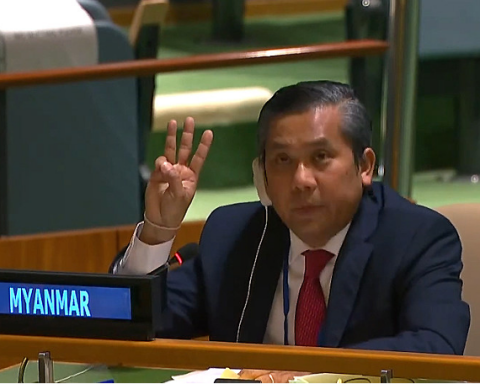
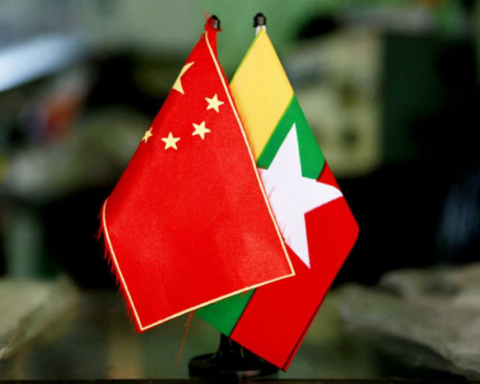
As mentioned earlier, ASEAN states find themselves in an uncomfortable position vis-à-vis the Sino-American competition. Since a more neutral posture would be the best doctrine for them – “don’t make us choose” – the strategy of hedging is the most employed in the sub-region. Indonesia has signed a Comprehensive Partnership with the United States in 2015 to enhance defensive capabilities while it continues to improve ties with China in order to profit from its constant rise and flows of investments. Malaysia has unresolved territorial disputes with the PRC, but it is avoiding escalating tensions; actually, it is strengthening economic ties with Beijing while maintaining good military cooperation with Washington. Myanmar has formally had a non-aligned posture over the years or, actually, a “limited alignment” with China. Beijing acts as a diplomatic protector and economic partner for the Burmese government, but the latter’s recently established relationship with the United States has rebalanced the country’s foreign policy considerations for a while. The 1st February military coup shuffled the cards and the Biden administration distanced itself from the military junta’s government. Singapore has always been the bulwark of neutrality in Southeast Asia, having a strong military relationship with the U.S. as well as a significant economic partnership with China. Thailand is a special case. Despite the long-standing alliance with the United States, a Thai scholar claims that the country is hedging. Inasmuch Thailand does not have any territorial or maritime dispute with China, the government does not feel particularly threatened, and it is enhancing its economic and military relationship with Beijing. Lastly, Vietnam copes with territorial and maritime disputes against China, but it has preferred a policy of “cooperation and struggle” rather than adhering to a resolute approach with would give sense to the strengthened American-Vietnamese military cooperation.[3]
Some countries do not want to hinder the PRC and thus they adopt a bandwagoning approach. Brunei, for example, has recently enhanced its economic partnership with Beijing dramatically, leading analysts to believe that the sultanate prefers economic help rather than resolving maritime disputes in the South China Sea. Cambodia and Laoshave always leaned towards their giant neighbor and they are the only two ASEAN countries to officially endorse China’s “community of shared future.”[4]
Finally, the only country which is balancing with the United States is the Philippines. The alliance with Washington and the dispute with the PRC over the Scarborough Shoal have determined a sufficiently resolute approach against Beijing, especially during the Aquino administration (2010-2016). In fact, the election of Duterte has caused a substantial shift in the foreign policy of the country. Duterte has expressed an anti-American sentiment various times, he complained about American criticism on his harsh war on drug, and he is highly attracted by Chinese economic benefits. For all these reasons, some analysts are wondering if the Filipino foreign policy is transitioning to a bandwagoning approach.[5]
The geopolitics of Southeast Asia deserves an attentive gaze. The Sino-American competition proceeds among highs and lows and it performs in a theater that changes its scene according to the behavior of the main actors, the U.S. and China. Many ASEAN states have had an indecisive foreign policy because they wish to take advantage from the ties with both great powers. The institution never tires of emphasizing the concept of “ASEAN centrality” and the importance of regional cooperation and multilateralism as mainstays of promoting peace and stability within the sub-region. However, the focus on “ASEAN centrality” is increasingly threatened by China’s coercive leverage and aggressiveness in the South China Sea, and by resulting American countermoves. “ASEAN has dealt with great power competition in the past, but as a peripheral region. Today, Southeast Asia is the main theatre of the emerging great power rivalry,” claims an ORF fellow. Being the center of gravity of the U.S.-China contest brings about enormous pressure. To date, the majority of ASEAN countries have more or less managed to maintain a balanced posture. Nonetheless, in future this may change. The “don’t make us choose” mantra may not last.
⃰ This analysis is an excerpt of the author’s master’s thesis. See Pezzati, A. (2021). “The Proliferation of Unmanned Systems in Southeast Asia. New Instruments to Deter China?” (Master’s thesis). DOI: 10.13140/RG.2.2.31893.65768. Available from ResearchGate,https://www.researchgate.net/publication/350313520_The_Proliferation_of_Unmanned_Systems_in_Southeast_Asia_New_Instruments_to_Deter_China
[1] Yahuda, The International Politics of the Asia-Pacific, 215; Stromseth, “Don’t Make Us Choose: Southeast Asia in the Throes of US-China Rivalry”.
[2] Stromseth, “Don’t Make Us Choose: Southeast Asia in the Throes of US-China Rivalry”, 2.
[3] Denny Roy, “Southeast Asia and China: Balancing or Bandwagoning?,” Contemporary Southeast Asia 27, no. 2 (August 2005): 305-322, https://doi.org/10.1355/cs27-2g, 306-308; Murphy, “Great Power Rivalries. Domestic Politics and Southeast Asian Foreign Policy: Exploring the Linkages,” 174-177; U.S. Department of Defense, Indo-Pacific Strategy Report, 28-30; ibid., 37-38.
[4] Stromseth, “Don’t Make Us Choose: Southeast Asia in the Throes of US-China Rivalry”, 5.
[5] Murphy, “Great Power Rivalries. Domestic Politics and Southeast Asian Foreign Policy: Exploring the Linkages,” 174-175.