The inter-Korean border is becoming a test of crisis management, deterrence and peaceful coexistence.
Introduction: a local incident in a wider strategic shift
On 21 September 2026, two landmine explosions in the Demilitarized Zone (DMZ) injured three South Korean soldiers, two seriously. A joint Republic of Korea (ROK)–United Nations Command (UNC) investigation subsequently identified an active North Korean mine south of the Military Demarcation Line (MDL), and on 30 September the UNC stated that an Armistice Agreement violation had occurred. The incident is strategically significant because it sits at the intersection of two opposing trends. Seoul is attempting to restore communication and institutionalise “peaceful coexistence”, while North Korea continues toharden its border and reject renewed inter-Korean engagement. The ROK Ministry of Unification’s 2026 programme prioritises conflict prevention, crisis management, and restoring mechanisms associated with the September 2018 Comprehensive Military Agreement.
The strategic problem is therefore whether dialogue and deterrence can operate simultaneously without producing contradictory signals. The central risk for October 2026–March 2027 is not an immediate return to full-scale war, for which the evidence is insufficient, but the normalisation of incidents that become harder to contain as physical and political barriers deteriorate. These developments should not be treated as automatic evidence of offensive intent. Fortification can serve defensive, territorial-control and signalling purposes simultaneously.
More importantly, physical engineering changes the conditions under which military personnel operate. Barriers, altered routes and mines increase the opportunities for patrols or engineering teams to misjudge the MDL or misinterpret the other side’s activity. Mines are particularly consequential because their effects can outlast the decision to deploy them. Once laid, they can remain dangerous without a fresh political order. The September incident therefore illustrates a broader problem: military infrastructure can create escalation risks even when neither side deliberately seeks escalation. The UNC’s decision to use established Armistice mechanisms is relevant not only legally but operationally, because it preserves an institutional channel for managing incidents below direct military confrontation.
Seoul’s dual track: peaceful coexistence and deterrence
The September incident tests whether this dual-track approach can survive a security shock. Seoul has demanded an apology and an end to border-hardening activities, while Lee has continued to advocate communication and practical tension reduction. This makes communication infrastructure a strategic variable in its own right. If direct or military channels remain unavailable, each incident must be interpreted through public statements, military deployments, and third-party mechanisms. That increases the risk that tactical actions become interpreted as strategic intentions. Conversely, functioning channels can create time for verification, clarification and de-escalation. For the next six months, therefore, the restoration—or continued absence—of crisis-communication mechanisms should be monitored alongside force posture.
PYONGYANG’S BORDER POLICY: CONTROL, SEPARATION AND SIGNAL MANAGEMENT
The important analytical distinction is between intent, capability and structural risk. Border construction indicates capability, and preparation, but does not by itself establish an intention to initiate war. Border construction has included layered fortifications along the border, indicating a sustained effort to reshape the physical security environment.
North Korea’s own messaging, however, points to a deliberate policy of separation: Kim Yo-jong said on 2 October that the purpose of the border fortifications was to “close the door to South Korea for good”. This indicates a strategic objective of institutionalised separation, but it still does not establish an intention to initiate military conflict. They do alter the environment in which future incidents occur. Risk increases when physical changes, hostile rhetoric, military activity and weak communication mechanisms reinforce one another.
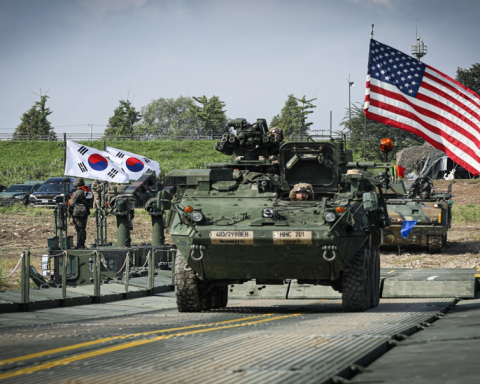
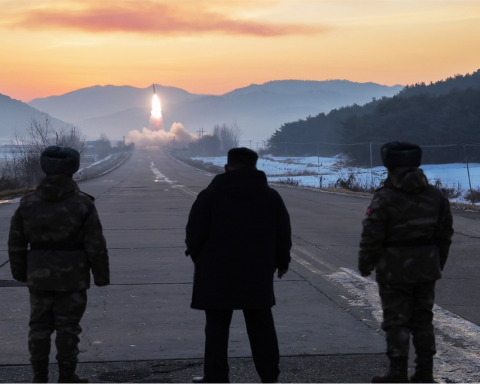
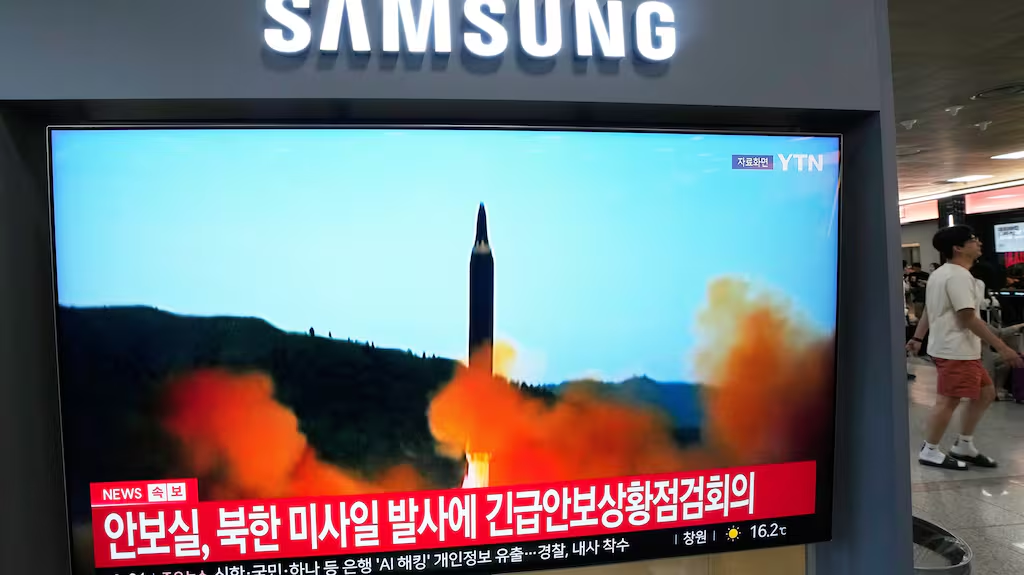
The 3 October ballistic-missile launch illustrates why the DMZ should not be analysed in isolation. South Korea’s Joint Chiefs of Staff reported that a missile launched from the Wonsan area travelled more than 700 kilometres, while the South Korean military stepped up surveillance and shared information with the United States and Japan.
The launch occurred only days after the mine dispute and immediately after renewed North Korean rejection of dialogue.one day after renewed North Korean rejection of inter-Korean dialogue. This temporal proximity does not establish that the missile launch was a direct response to the DMZ incident. It does, however, demonstrate that border tensions are embedded in a broader military-signalling environment. Later on 3 October, North Korea described the launch as a strategic missile firing drill overseen by Kim Jong-un.
2015 AND 2026: WHY THE PRECEDENT CANNOT SIMPLY BE REPEATED
The 2015 DMZ mine crisis provides a useful comparison. In August 2015, South Korean soldiers were injured by mines, Seoul resumed loudspeaker broadcasts, North Korea fired artillery towards the South, and the confrontation culminated in high-level negotiations. The crisis was eventually contained through an agreement reached after intensive talks.
Contemporary analyses of the 2015 episode show how rapidly a local incident moved through signalling, military retaliation and diplomatic negotiation. The value of the comparison lies in what has changed. In 2015, both governments still possessed mechanisms for reciprocal signalling and negotiation. In 2026, those mechanisms are weaker, while North Korea has adopted a more rigid conception of the inter-Korean relationship and Seoul is attempting to rebuild channels.
The same trigger therefore operates within a different strategic system. The forecasting question should not be whether 2026 will “repeat” 2015, but whether the two sides retain enough institutional capacity to interrupt escalation before direct military exchange. The availability and use of communication channels may therefore be more informative than the severity of an individual border incident.
FORECAST: OCTOBER 2026 – MARCH 2027
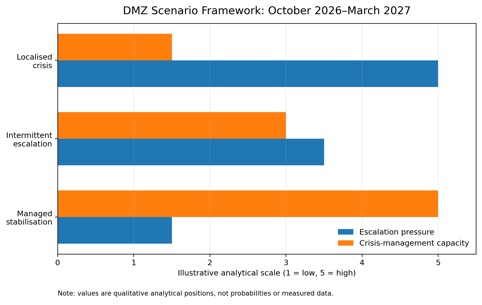
Three analytical trajectories are relevant over the next three to six months. They are not mutually exclusive predictions; rather, they identify observable pathways against which new evidence can be assessed.
The key methodological point is convergence: a single mine blast, missile launch, or hostile statement is less informative than several indicators moving in the same direction.
| Trajectory | Horizon | Core dynamic | Indicators |
| Managed stabilisation | 0–3 months | Limited incidents; calibrated responses; communication preserved. | Armistice mechanisms; no new casualties; military contacts; UNC engagement. |
| Intermittent escalation | 0–6 months | Repeated incidents, accusations and military signalling without sustained combat. | New mines/barriers; MDL incidents; warning fire; rhetoric; missile tests. |
| Localised crisis | Any point within the six-month period | A serious incident or cluster overwhelms crisis-management mechanisms. | Casualties; direct fire; unusual force movements; communication breakdown. |
The trajectory requiring particular attention is intermittent escalation.
Not because it implies an inevitable path to war, but because repeated “limited” incidents can gradually change the security baseline. If each incident produces stronger rhetoric, more fortification, additional surveillance and less communication, the threshold for the next confrontation may fall even without a deliberate decision to initiate major conflict.
WHAT WOULD CHANGE THE ASSESSMENT?
Several developments would materially alter the assessment. Restored military communication, fewer border incidents, and practical confidence-building measures would support stabilisation. Conversely, repeated casualties, direct exchanges of fire, systematic expansion of minefields or barriers, persistent MDL crossings, or breakdown of Armistice mechanisms would indicate narrowing crisis-management capacity.
The wider military environment also matters. Additional ballistic-missile launches, unusual force movements, major changes in ROK-US readiness, or new restrictions on routine activity near the DMZ would be more significant if they occurred together. The analytical value lies in convergence rather than simple accumulation: mutually reinforcing indicators would justify reassessing the baseline risk.
CONCLUSION
The September 2026 mine blast is best understood as a stress test for a changing security environment. The DMZ remains a buffer, but is increasingly an engineered military space where fortifications, mines, surveillance, political signalling and alliance deterrence interact. The principal risk is that physical changes and weak communication mechanisms make local incidents harder to contain.
The accumulation of military infrastructure should therefore be read as a change in capability and risk exposure, not as conclusive evidence of an imminent decision for war.
For Seoul, the next three to six months will test whether peaceful coexistence can become practical crisis-management capacity without weakening deterrence. For Pyongyang, the observable question is whether border separation and military signalling remain controlled instruments of pressure or increasingly generate incidents that neither side can manage easily. For the UNC and the wider alliance network, the key function will be preserving mechanisms that separate incident management from uncontrolled escalation.
The decisive indicators will be observable: border construction, MDL incidents, missile activity, force posture, communication channels, and use of Armistice mechanisms. If these variables move in the same direction, the DMZ’s strategic significance will increase. If communication and restraint improve despite continued competition, the frontier may remain tense but manageable.