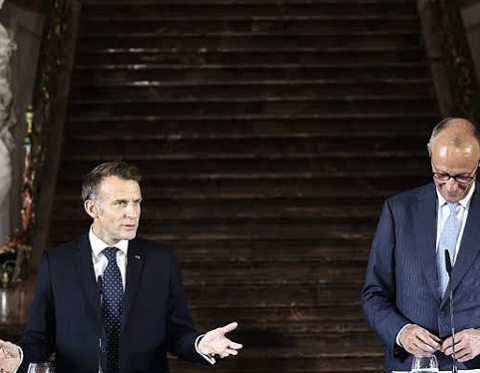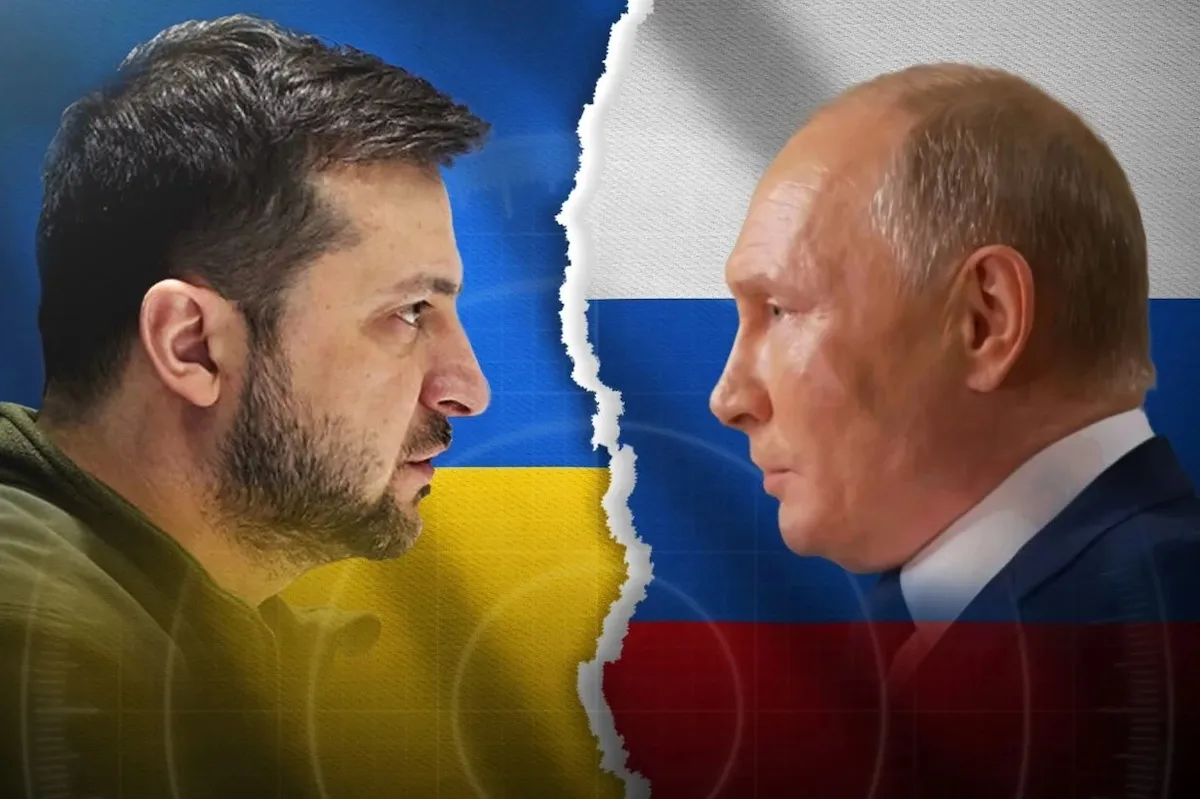
As of today, the war in Ukraine has been ongoing for more than four years; however, the origins of the conflict between Russia and the Western bloc run much deeper and can be traced back to longstanding geopolitical tensions.
Moscow claims that its actions aim to address the root causes of this long conflict, whereas Kyiv and its allies reject these claims and continue pursuing a policy of rearmament in response to Russian territorial gains. In fact, the European Union has recently allocated an additional €90 billion in financial and military support to assist Zelenskyy in continuing the war from a stronger position. Given the opposing positions, the current situation offers little ground for optimism regarding a near-term resolution.
Introduction
In February 2014, the Euromaidan protests in Kyiv, which led to the fall of President Viktor Yanukovych, marked a major turning point in the broader geopolitical tensions between Russia and the West. The United States had long supported Ukraine’s political development in line with shared objectives, with Victoria Nuland referring to $5 billion in U.S. assistance since 1991. This support also included funding from the National Endowment for Democracy for media and political initiatives widely perceived as supportive of U.S. objectives in Ukraine.
The initially peaceful pro-EU protests in Kyiv escalated into violent clashes involving far-right armed groups and sniper fire, resulting in the deaths of over 100 people, later remembered as the “Heavenly Hundred.” Responsibility for sniper shootings remains debated. However, in a leaked call, the former Estonian Foreign Minister Urmas Paet suggested to Catherine Ashton that elements linked to the new coalition may have been involved, citing information he had received in Kyiv. Similar allegations were later supported by subsequent journalistic investigations.
Stepan Bandera poster following Euromaidan
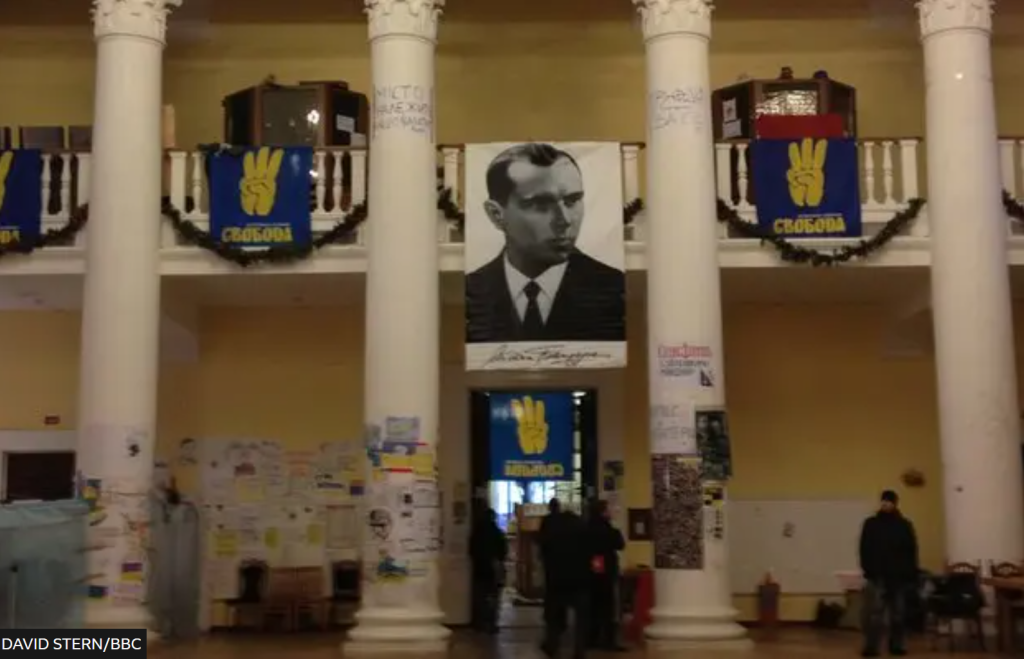
Source: https://www.bbc.com/news/world-europe-26468720
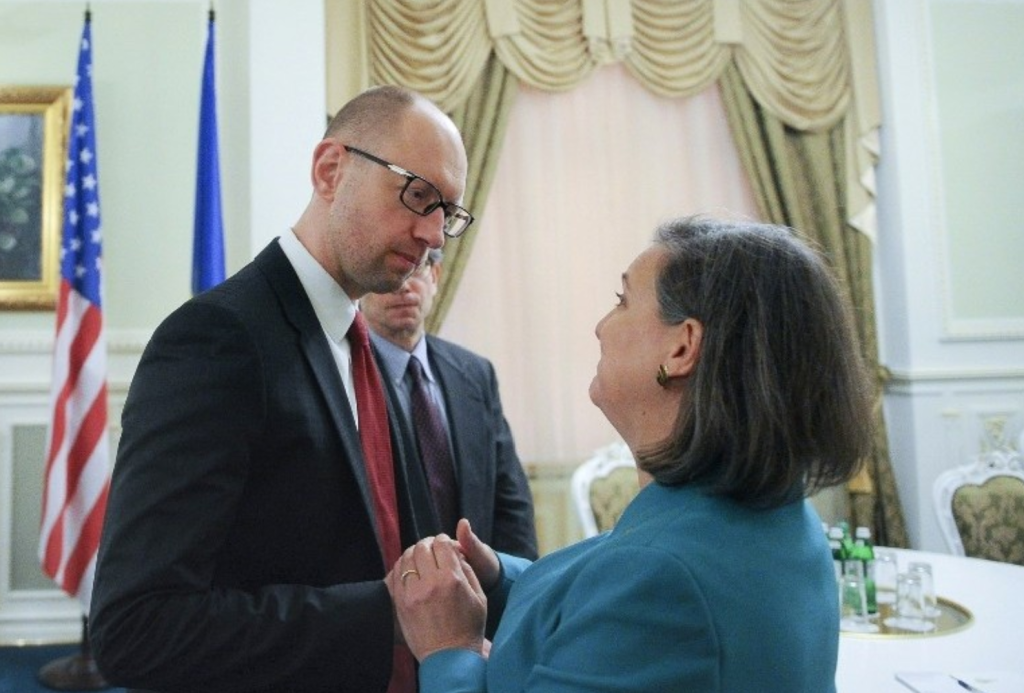
An interim government led by Arseniy Yatsenyuk was subsequently formed, as previously discussed in a leaked phone call involving Victoria Nuland and Geoffrey Pyatt. Following the onset of the Euromaidan protests in late 2013, the Crimean parliament expressed its opposition in January 2014. Consequently, in March, after the new governing coalition took power in Kyiv, Crimea held a disputed referendum on joining Russia. Unrest also spread to the Donbasregion, prompting Kyiv to launch an “Anti-Terrorist Operation” against anti-Maidan and pro-Russian separatists, further escalating into an armed conflict.
Attempts to resolve the conflict in 2014 through the Minsk Protocol and Minsk II Agreement were never fully implemented. Consequently, in March and April 2022, one month after the Russian invasion, negotiations held in Istanbul and Belarus explored issues related to neutrality and security guarantees. However, Ukraine ultimately declined the proposals, amid reports of external diplomatic pressure and promises of continued Western support; and the conflict continued despite reports of a near agreement.
Anti-Maidan protesters in Donetsk region
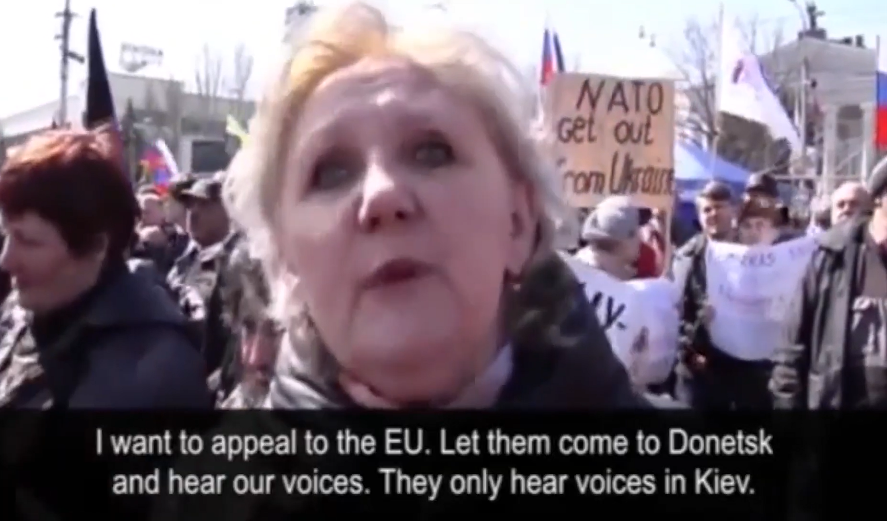
Source: https://www.youtube.com/watch?v=WGHsGmeAFTA
Corpus
The causes behind Russia’s so-called “Special Military Operation” (SMO) are complex, contested, and largely unaddressed. One factor frequently cited by Moscow is the alleged oppression of Russophone populations by armed groups, including far-right elements, alongside restrictions on the Russian language. Russian officials have framed part of the operation as a process of “denazification”, a concept central to their narrative and subsequent negotiations.
Another key issue concerns NATO’s eastward expansion, including the prospective membership of Ukraine and Georgia, an aspiration publicly affirmed at the 2008 Bucharest Summit. From 2014 onward, cooperation between NATO and Ukraine intensified through military training and support, despite Ukraine’s non-membership. According to a Wall Street Journal report, around 10,000 Ukrainian troops were trained annually by NATO over several years.
The SMO launched by Vladimir Putin on February 24, 2022, has been framed by Russian authorities as a response to perceived NATO-related security threats and the protection of ethnic Russians. In 2023, Jens Stoltenberg stated at the European Parliament that NATO expansion had been a key issue raised by Vladimir Putin prior to the invasion, noting that Moscow sought security guarantees in 2021, including a halt to enlargement, proposals that were ultimately not accepted.
From this perspective, Russian officials argue that addressing these “root causes” is essential to ending the conflict. In contrast, Kyiv and its allies reject this approach, as well as Russia’s territorial claims over Luhansk, Donetsk, Zaporizhia and Kherson Oblasts, which Moscow annexed in September 2022. These claims remain unrecognized, with Ukraine and its partners calling for full Russian withdrawal, an outcome that Vladimir Putin has consistently rejected.
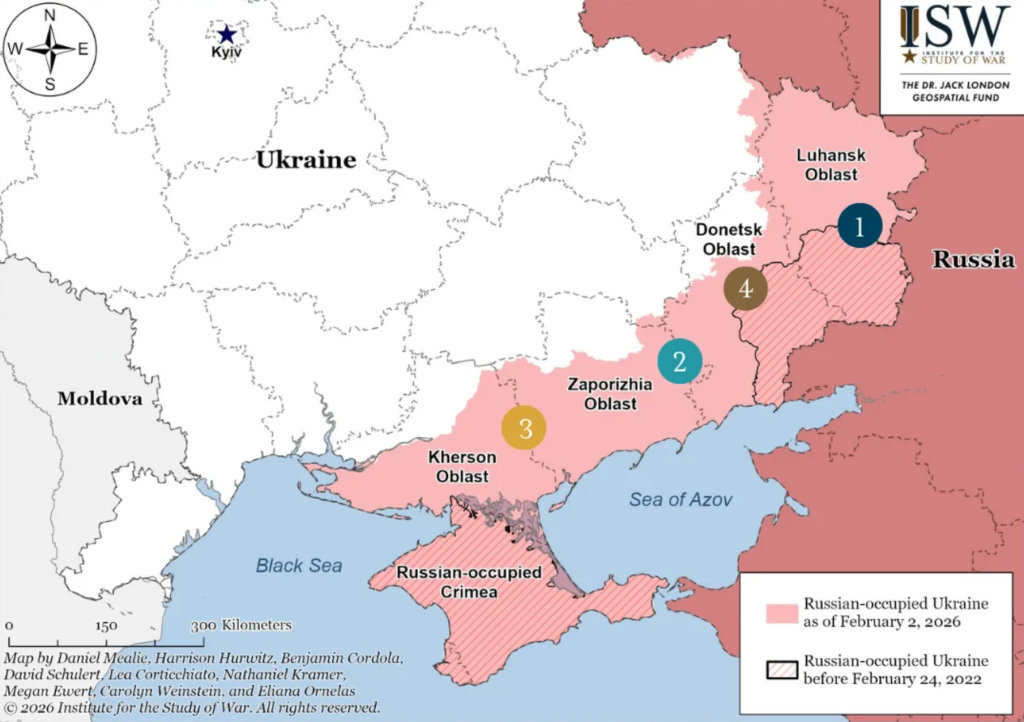
In August 2025, during the Alaska Summit, negotiations between the U.S. and Russia reportedly addressed several of these underlying issues. A 28-point peace plan was said to be agreed between Donald Trump and Vladimir Putin, aimed at addressing the root causes of the Russo-Ukrainian war. However, Zelenskyy and supporting countries, often referred to as “coalition of the willing”, opposed the proposal, considering it too favorable to Russia, and no agreement was reached.
As of today, no clear solution appears to be in sight. The European Union has recently approved a €90 billion support package for Ukraine, while additional drones are being delivered to Kyiv.
Speculative hypothesis
One possible interpretation is that Ukraine’s involvement in this prolonged conflict reflects a broader U.S.-backed strategy aimed at extending American influence and weakening Russia.
This perspective is often linked to geopolitical strategies dating back to the 20th century and is associated with works such as the “The Grand Chessboard” by Zbigniew Brzezinski, former U.S. National Security Advisor, as well as in other works on the importance of Eurasia for American geopolitical strategy.
Within this analytical framework, several developments are often cited, including the decision to enlarge NATO in 1994, the American withdrawal from the ABM Treaty in 2002 and the continued presence of U.S. officials in Kyiv before and after the 2014 protests, as well as the previously mentioned $5 billion in U.S. assistance to Ukraine, and the leaked phone call involving Victoria Nuland. Alongside allegations of Ukrainian involvement and possible CIA role in the Nord Stream sabotage, which some interpret as part of a broader strategy to weaken EU-Russia energy and economic ties and shift European dependence toward alternative suppliers, including the United States.
Ukrainian Prime Minister Arseniy Yatsenyuk (L) greeting Assistant Secretary for European and Eurasian Affairs Victoria Nuland upon her arrival for a meeting in Kyiv on Oct. 6, 2014.
It is further argued that these developments, including the Russian invasion, have had dramatic consequences for Ukraine itself, given the ongoing war and its humanitarian, social, and economic impacts.
The persistence in continuing to fund the war and rejecting Russian terms can be explained by several factors. Moscow is currently in an advantageous territorial position and has shown no intention of withdrawing. At the same time, the U.S. and its European allies have already made significant political, military, and financial investments since before 2014, which intensified further after 2022. As a result, they appear reluctant to accept Moscow’s territorial gains and conditions. The €90 billion loan, framed as potentially repayable by Russia, helps justify continued support as a pathway toward achieving a “victory”, despite uncertain prospects.
Moreover, accepting Russian conditions could be perceived as a strategic failure, exposing Western leaders to both domestic and international criticism while weakening NATO’s credibility. Such an outcome could strengthen Moscow’s position and further shift the balance of power in its favor.
So What
As of today, based on recent EU developments, one possible scenario is that the war will continue for several more years, with no clear timeline for resolution. The European Parliament has recently approved a €90 billion loan package for Ukraine, alongside the 20th round of sanctions against Russia. The support package for Kyiv is divided into €60 billion for defense and €30 billion for macro-financial assistance and budgetary support.
In response, Moscow is likely to mobilize additional resources to sustain what has increasingly become a war of attrition, raising concerns about potential escalation, particularly in the absence of meaningful diplomatic negotiations and the the continued emphasis on military build-up.
Ukraine’s armed forces are therefore expected to strengthen their position, while Russia is also likely to intensify efforts to consolidate its territorial gains in Donetsk, Zaporizhia and Kherson, which are still not fully under Moscow’s control.
According to a statement by Mark Rutte in January 2025, NATO countries collectively produce in one year what Moscow produces in only three months in military output, underscoring both the imbalance in military production and a reactive cycle of escalation, in which additional NATO members’ assistance prompts proportional countermeasures from Russia.
Best-Case Scenario
The best-case scenario is that the war will come to an end by 2028, when the EU’s €90 billion support package will likely have been largely spent. In this scenario, the war of attrition would continue for a few more years, without major territorial gains by Russian forces. This could eventually lead both sides to enter negotiations and seek a mutually acceptable solution.
Under this scenario, Moscow might agree to withdraw from Kherson and Zaporizhia, which could be granted a form of autonomy, rather than being fully annexed. At the same time, the Donbas region could be formally incorporated into Russian territory. Ukraine, in turn, might commit to a non-aligned status by abandoning its NATO ambitions, while receiving security guarantees from international actors and finally holding governmental elections, following what Russia describes as a process of “denazification” within Ukraine.
Worst case scenario
A more pessimistic scenario would involve an escalation of the conflict following the recent military support to Ukraine. According to recent statements by Dmitry Medvedev regarding the risk of escalation and the potential involvement of other EU countries, such a scenario could materialize sooner than expected.
He stated that the supply of drone components could turn European countries into legitimate military targets. Furthermore, the potential continued use of some EU members’ airspace by Kyiv could provoke a strong reaction from Russia, extending the conflict beyond Ukraine’s borders into other European territories.
These statements highlight the perceived risks of escalation and underscore the importance of carefully assessing potential developments and their broader implications.
Conclusion
In conclusion, the reality behind this 12-year-long war remains highly complex, and the influence of external actors appears to have been significant in shaping and sustaining the conflict from its early stages. Both sides frame their actions as responses to security threats, with no comprehensive common ground. The war does not appear to benefit Ukraine, and uncertain benefits for Russia, unless Moscow ultimately secures recognition of some eastern or southern regions as part of a settlement.
At present, there is no negotiation in sight or any comprehensive peace plan, with continued emphasis instead placed on military support and rearmament policies, which offers little basis for optimism regarding a resolution.
One possible outcome is that the conflict will only end once the underlying causes are addressed and when the side at a disadvantage becomes willing to enter negotiations under conditions largely defined by the stronger party, as is often the case in historical conflicts.