


In documents issued in 2026, the term Central Asia–South Asia (CASA) is used for a proposed rail connection linking Kazakhstan and Uzbekistan to Pakistan through Afghanistan.
Abstract
Russia has diplomatic, security and industrial interests along the same southern axis, but does not exercise exclusive control over it. The memorandum signed by Kazakhstan, Uzbekistan and the United Arab Emirates, alongside a trilateral feasibility-study agreement, provides evidence of institutional progress; neither establishes that a continuous railway has already been built. The central analytical challenge is the gap between geopolitical ambitions and technical and financial feasibility. Russia’s potential to diversify access to Asian markets must be weighed against Central Asian strategic autonomy, China’s simultaneous role as competitor and partner, and political-military tensions among Afghanistan, Pakistan and India. [S01, S02, S07, S08]
Methodological Note
This dossier draws on government statements, diplomatic releases, parliamentary documents, legal instruments, customs data, specialised reporting and publicly verifiable photographs. Confirmed facts are distinguished from political attributions, capacity projections, temporal correlations and forward-looking hypotheses. The research cut-off is 27 October 2026. Trade figures based on different calendar and fiscal years are not treated as fully comparable. Archival photographs verify places and existing infrastructure, not events occurring in 2026: each exhibit specifies what it does and does not establish. Confidence assessments describe the quality and convergence of the available evidence, not mathematical probabilities. [S01–S19]
Information and Terminological Limitations
CASA was used as a geographical term before 2026 and should not be confused with CASA-1000, which is a separate electricity-transmission initiative. Verified sources also use the term in connection with the recent railway memorandum; they do not establish the existence of a formal Russian doctrine called CASA. Proposed routes, costs and throughput vary across project versions. Security consultations are not equivalent to a final investment decision. Any reconstruction of intelligence-related missions is necessarily constrained by the limited nature of the information publicly available.
Introduction
The Economics of Connectivity: Russia, Central Asia and Pakistan
The railway question originates in an economic asymmetry. According to the relevant Uzbek ministry, Russia–Uzbekistan trade reached approximately USD 13 billion in 2025, an increase of 8.4%; bilateral trade exceeded USD 9 billion in the first eight months of 2026, up by 10%. Meanwhile, Pakistan’s presidency valued Russia–Pakistan bilateral trade at USD 243.412 million in fiscal year 2025, pointing to considerable untapped potential. These numbers concern two bilateral relationships and different reporting periods, but they reveal an order-of-magnitude difference: Moscow is commercially integrated with Tashkent to a significant degree, whereas its trade with Islamabad remains relatively modest. [S03, S04, S05]
Central Asian economies are not an exclusive Russian sphere. Uzbekistan recorded total foreign trade of around USD 81.2 billion in 2025, with China accounting for 21.2% and Russia for 16%. China’s Ministry of Commerce reported that trade between China and the five Central Asian republics reached USD 106.3 billion in 2025, including USD 71.2 billion in Chinese exports and USD 35.1 billion in imports. This regional aggregate should not be directly compared with individual bilateral trade relationships; it nevertheless illustrates Beijing’s systemic economic weight in Central Asia. [S06, S16]
For landlocked Uzbekistan, access to Pakistani ports could reduce some transit dependencies and create additional commercial opportunities. For Pakistan, which already has maritime access to the Indian Ocean but seeks deeper economic connections to the north, the potential gains lie in port, customs and logistics services and greater market diversification. A Pakistani parliamentary response issued in 2025 valued transit trade with Central Asian republics at roughly USD 410 million in fiscal year 2024–25. This suggests that relatively limited existing transregional demand would have to expand substantially to support a strategic railway investment. [S09]
Why a Land Corridor Is More Than a Line on a Map
A railway consists of more than tracks. Its commercial value depends on service frequency, tariffs, physical security, terminal access, predictable customs procedures, transshipment times and bankability. A shorter route can be more expensive when it crosses frequently closed borders or requires high insurance premiums. Karachi and Gwadar are possible maritime outlets; however, identifying the truly competitive port requires operational connections and verifiable prices, not merely geographical proximity.


Analytical Corpus
CASA: What Has Actually Been Documented
On 30 September 2026, the relevant ministries of Kazakhstan, Uzbekistan and the United Arab Emirates signed a memorandum in Astana on cooperation concerning the Kazakhstan–Uzbekistan–Afghanistan–Pakistan railway project, described as Central Asia–South Asia (CASA). The understanding provides for technical, economic and financial studies and the possible establishment of a working group. According to public information cited by Interfax, potential annual capacity of up to 10 million tonnes is an ambition for the corridor to Pakistani ports, not an observed shipment volume. The UAE’s participation also indicates that Gulf investment and logistics expertise form part of the proposed structure rather than an incidental addition. [S01, S19]
The Trans-Afghan Railway: Procedural History and Feasibility
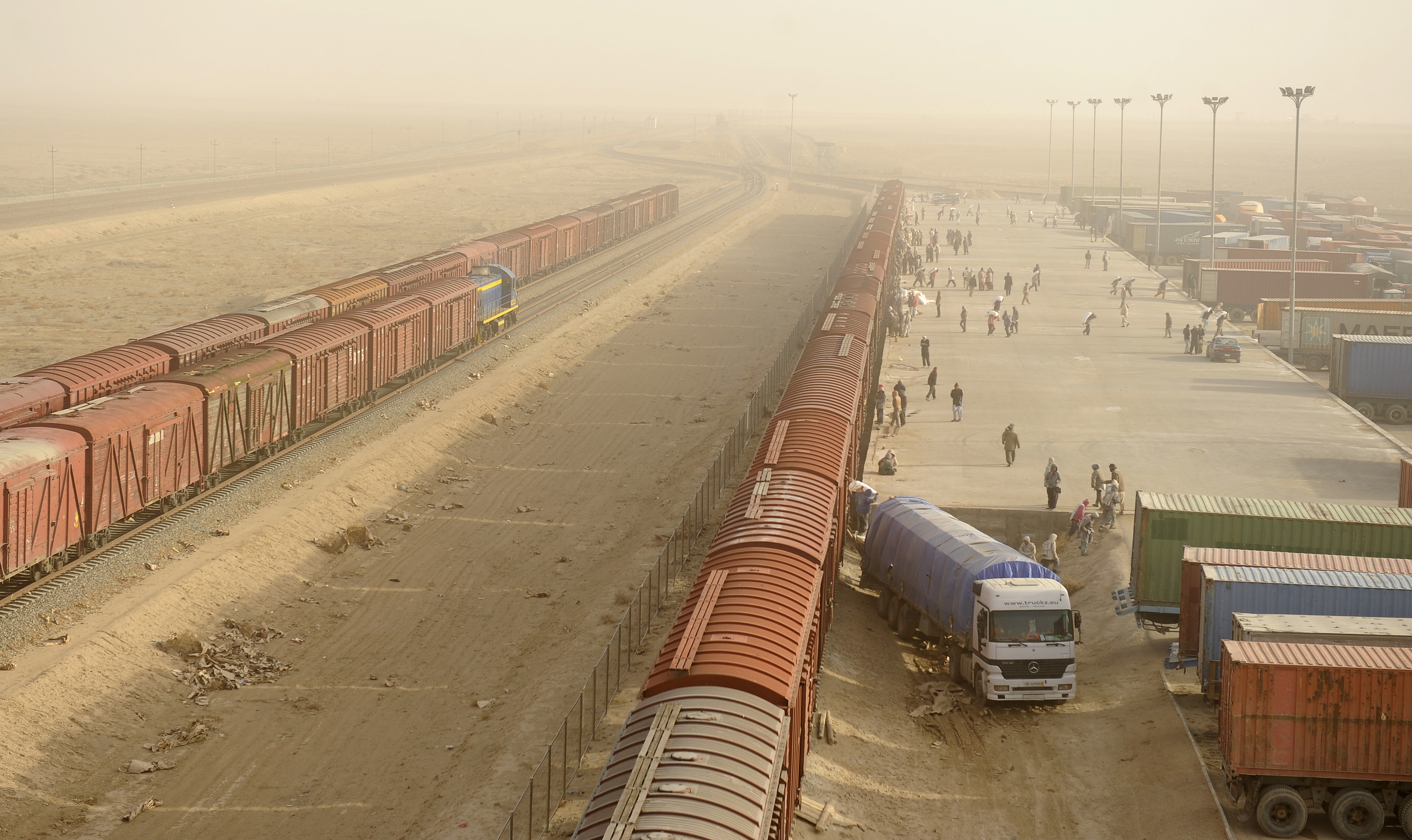
On 17 July 2025, Afghanistan, Pakistan and Uzbekistan signed a trilateral agreement to undertake a joint feasibility study. On 9 February 2026, Uzbekistan’s president approved the legal framework for that study. One of the more recent formulations identifies Naibabad and Kharlachi as the endpoints of the new segment, while earlier representations included alternative alignments via Mazar-i-Sharif and Peshawar. The existing northern railway, route variants under study and the envisaged end-to-end connection to the ports must therefore be carefully distinguished. [S07, S08]
Available project estimates are not an approved budget and vary according to line length, alignment and technical assumptions. Some sources refer to approximately 573 kilometres for the Trans-Afghan railway and potential throughput of up to 20 million tonnes a year in different project versions. The September 2026 CASA memorandum, by contrast, refers to potential throughput of up to 10 million tonnes. Neither figure represents freight already transported. Afghanistan’s difficult terrain, civil-engineering requirements, differing railway gauges and intermodal systems make the feasibility stage a critical test rather than a formality. [S01, S02]

Three Russian Missions in October 2026
Russia’s interior minister Vladimir Kolokoltsev met Pakistani president Asif Ali Zardari on 13 October 2026 and Pakistan’s military leadership on 14 October. Official communications describe discussions of security, terrorism, economic cooperation and connectivity, without assigning the minister authority to negotiate financing for the railway. At roughly the same time, credible news reports described a meeting in Kabul between SVR director Sergei Naryshkin and Taliban intelligence chief Abdul Haq Wasiq. In New Delhi, the seventh India–Russia mechanism on Afghanistan and Pakistan convened, co-chaired by Russia’s deputy Security Council secretary Aleksandr Venediktov and India’s deputy national security adviser Pavan Kapoor. Together, these visits indicate engagement by several diplomatic and security institutions. A coordinated economic objective remains a plausible inference, not evidence that Moscow commands the corridor. [S05, S10, S11, S12]
Russian Interest in Infrastructure, Transport and Hairatan
On 7 October 2026, Russian deputy transport minister Dmitry Zverev stated that Moscow was considering participation by Russian companies in Afghan railway and infrastructure projects, including the Hairatan river port. The International North–South Transport Corridor network was mentioned in the same context. Interfax also referred to a preliminary 2024 understanding on Russian involvement and a theoretical potential of 8–15 million tonnes of Russian freight along the route. This is direct evidence of sectoral interest; it does not prove that construction has been funded or that binding freight contracts exist for those volumes. [S02]

The Soviet Precedent: The 1969 Kosygin Plan
The proposal advanced by Alexei Kosygin in 1969 envisaged overland trade connections and cooperation among the USSR, Afghanistan, Pakistan and India. In historian A. G. Noorani’s account, road infrastructure and commercial transit from the Soviet Union to India through Afghanistan and Pakistan were central to the plan. It was not the same railway project being discussed today. The 1966 Tashkent diplomatic process provides a precedent for this multilateral approach, but the historical setting was shaped by the Sino-Soviet rivalry and very different political and military alignments. The continuity concerns territorial logic and diplomatic engagement, not an identical engineering project. [S13]
The Independent Choices of Uzbekistan and Kazakhstan
Tashkent and Astana are seeking to diversify their external partners and transport links. Kazakhstan’s participation in the CASA memorandum signals interest in another southern outlet, while Uzbekistan could connect a future line to its northern infrastructure and to other routes toward China, the Caspian and Iran. It would be analytically misleading to treat these countries as extensions of Russian decision-making: joining an open corridor could strengthen their bargaining position vis-à-vis both Moscow and Beijing. [S01, S16]

China as Partner, Competitor and Potential Major User
China is participating in the transformation of Eurasian connectivity through investment, trade networks and the China–Kyrgyzstan–Uzbekistan railway project. If built, a trans-Afghan line could connect with Central Asian networks and carry Chinese goods as well. In that case, regional logistical gains would not necessarily entail stronger Russian primacy. Beijing’s already documented economic weight in 2025 makes a model of multiple routes and multiple financiers more plausible than one in which Central Asian states select a single dominant power. [S06]
India: Market Access and the Political Veto on Transit
Reaching India through Pakistan faces a concrete legal obstacle. Pakistan’s S.R.O. 750(I)/2025 prohibits, among other things, the transit of third-country exports destined for India through Pakistan. India concurrently introduced a ban on imports of goods originating in or exported from Pakistan, subject to any subsequent legal changes. The sources reviewed do not establish a general repeal of these restrictions by the dossier’s cut-off date. Consequently, a railway reaching Pakistan is not the same as unrestricted overland access to India’s domestic market. Kashmir remains a background obstacle to relations between New Delhi and Islamabad, but it is not the same immediate operational security threat as instability along the Afghan segment. [S14, S15]
The Afghanistan–Pakistan Conflict
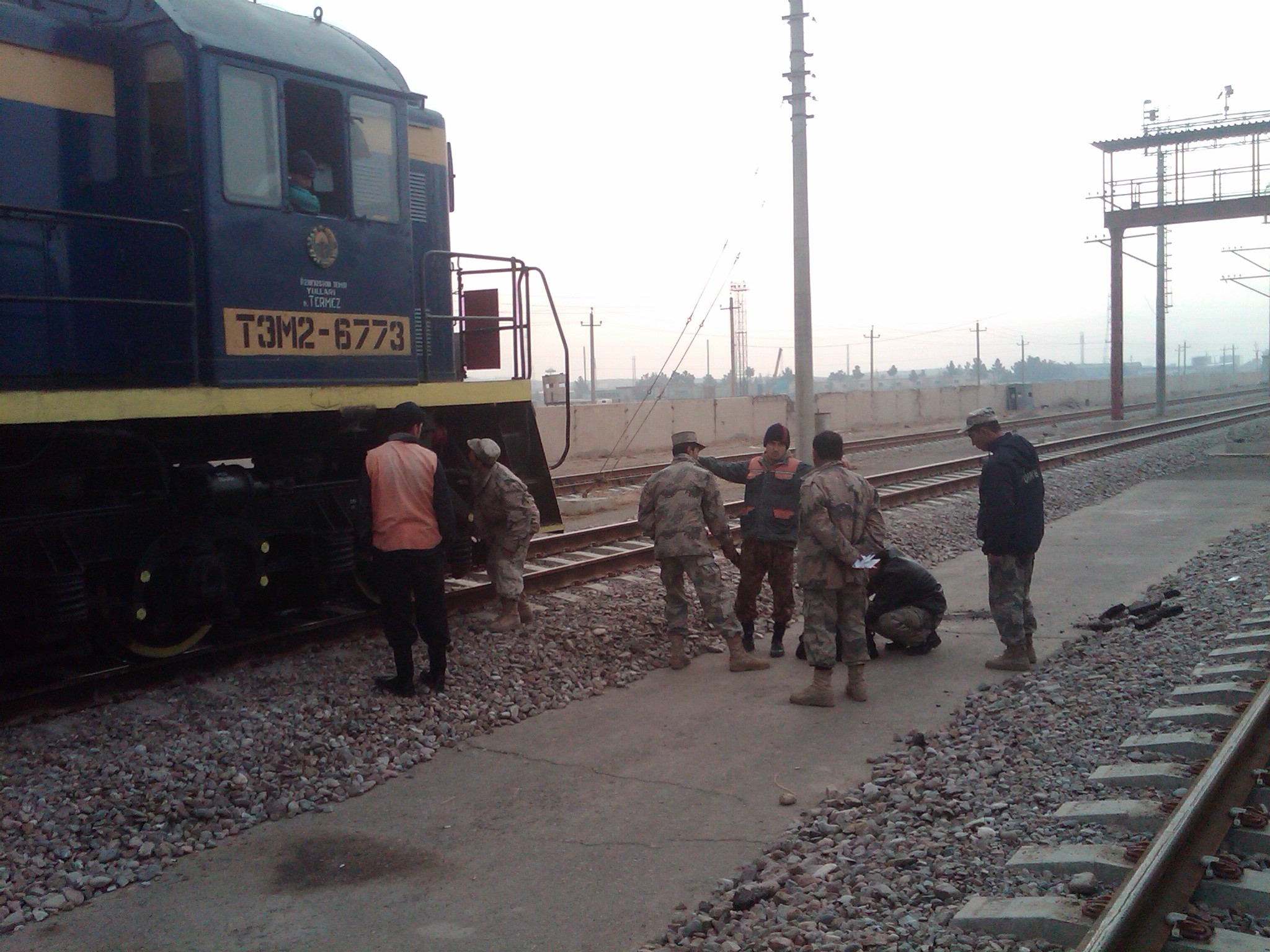
Security along the Afghan–Pakistani border is the most immediate operational risk. Continued clashes, incursions, crossing closures and mutual accusations undermine the reliability of any international transport link. Islamabad attributes some threats emanating from Afghanistan to the presence of Tehrik-e-Taliban Pakistan (TTP) militants; Kabul rejects accusations that it tolerates cross-border attacks. Economic incentives may support dialogue, but infrastructure cannot automatically neutralise a conflict in which security and sovereignty take precedence. [S11]
ISIS-K and the TTP Are Different Organisations
Islamic State Khorasan Province (ISIS-K) constitutes a transnational terrorist threat and opposes the Taliban, whereas the TTP is a distinct militant actor especially central to tensions between Kabul and Islamabad. Conflating them creates causal errors: international terrorism and Pakistan’s cross-border security challenge require different responses. The railway would need technical and physical controls, infrastructure protection, cargo management and durable political guarantees. Russia may present itself as a security interlocutor, but it has not been shown to have a general mandate from the parties to resolve every dispute. [S11]

Pakistani Ports and the Question of Commercial Viability
Karachi and, potentially, Gwadar are envisaged maritime outlets, but having a port does not mean that freight will arrive without interruption. Economic assessment should compare total rail and intermodal costs with established routes through Iran, the Caspian, China and maritime services. Potential cargo categories include containers, cereals, fertilisers, metals and semi-finished goods; for crude oil and very large energy flows, shipping and pipelines retain distinct economies. Analysts must identify who would pay track-access charges, insurance premiums, civil-engineering costs and any additional security expenses.

The Role of Alternative Corridors
CASA is not being proposed in an infrastructure vacuum. The Trans-Caspian Middle Corridor links Central Asia to the Caucasus, Türkiye and Europe; the International North–South Transport Corridor encompasses several routes between Russia, the Caspian, Iran and India; and the China–Kyrgyzstan–Uzbekistan project connects Central Asia with Chinese markets. These networks are not only potential competitors but may also provide feeder traffic and interchange nodes. Their development can reduce the cost of reliance on any single route. In its work on the Middle Corridor, the World Bank highlights investment in nodes, customs systems and operational coordination—variables that matter equally for CASA. [S02, S18]
Sanctions: Diversification, Not Immunity
A South Asian transport route could help some Russian companies diversify suppliers, destinations and logistics. It would not, however, remove sanctions applicable to the origin of goods, designated persons, financing or controlled technologies. Legally, bypassing a Western shipping route does not make an otherwise prohibited transaction lawful. Permitted trade, reduced infrastructure dependency and sanctions evasion must be distinguished. In the absence of transaction-specific evidence, CASA should not be categorically described as a project designed to breach sanctions. [S17]

Military Leverage and the Limits of an Imperial Interpretation
Russia retains military, institutional and economic instruments that can affect Central Asian security; the CSTO intervention in Kazakhstan in 2022 illustrates the existence of regional capabilities. There is no established evidence, however, that the CASA project involves plans to use force against participating states. Indeed, excessive coercive pressure could lead these states to diversify their partnerships further, undermining Russia’s logistical goals. Historical continuity with land empires can therefore serve as an interpretative hypothesis, not an all-encompassing explanation.
Speculative Hypothesis
Tactical Convergence Without a Single Hegemon
The hypothesis most consistent with the evidence is that Moscow is attempting to position itself as a security facilitator and potential investor in an infrastructure process already driven by the interests of Central Asian states, Pakistan and outside investors. Stronger Russian contacts in October 2026 may be intended to reduce political uncertainty surrounding southern projects and improve Moscow’s negotiating position in a region increasingly connected to China and Gulf actors. Russia could benefit even without exercising direct control of the line. The connection between security missions and future contract awards remains hypothetical: no documents were found formally linking all the missions to a single CASA command structure.
An Alternative Hypothesis: A Railway Built, but Not Controlled, by Russia
An outcome often overlooked in imperial narratives is a link that benefits Kazakhstan, Uzbekistan, China, Pakistan and the UAE more than Moscow. Russia might participate as a network user, service provider or industrial partner without controlling tariffs, standards or access decisions. The infrastructure’s economic potential and Russia’s geopolitical advantage could therefore diverge.
So What
Hypotheses: Four Plausible Trajectories
Under the progressive-integration scenario, lower tensions between Kabul and Islamabad and credible financing allow the project to move from feasibility studies to construction and, over the longer term, reliable train services. Under fragmented development, individual hubs and stretches of track are completed without end-to-end commercial continuity. Under paralysis, conflict and financing constraints leave the proposal on paper. Under a predominantly Asian success scenario, the railway is completed but principal financial and commercial levers are held by actors other than Russia. None of these scenarios should be assigned arbitrary percentages unsupported by a verifiable statistical model.
Impacts: Security, Supply Chains and Regional Autonomy
For Central Asian states, an efficient corridor could reduce vulnerability stemming from reliance on a small number of transit routes. For Pakistan, it could generate port services, logistics revenue and more dependable access to Central Asian markets. For Afghanistan, notwithstanding institutional and security risks, it could offer jobs, customs receipts and incentives for regional cooperation. For Russia, it could expand the range of goods that can be shipped south. For China, it could create another outlet for its rail networks. The actual distribution of benefits will depend more on infrastructure ownership and access rules than on geography alone.
Strategies: Implications for Procurement, Business and Investors
Italian companies should approach CASA as a potential long-term diversification option, not an immediately available corridor. Procurement evaluation would require actual freight quotations, border-crossing reliability, counterparty due diligence, cargo insurance, financing access and sanctions compliance. Infrastructure investors should assess the allocation of political and construction risks, revenue currency, sovereign guarantees and possible reliance on multilateral financing. European policymakers should examine how to support commercial connectivity and Central Asian agency without assuming either inevitable Russian hegemony or Russia’s complete decline.
Conclusions
CASA is a genuine diplomatic connectivity initiative at the study stage, not yet a completed railway corridor. Russia has demonstrated industrial interest and intensified its security engagement in the region. Yet the institutional core of the September 2026 memorandum also involves Kazakhstan, Uzbekistan and the UAE, while successful implementation depends primarily on security in Afghanistan and Pakistan, viable financing and actual commercial demand. The comparison with the 1969 Kosygin Plan is analytically useful only insofar as it identifies an interest in overland transit and cooperation among rivals; it is misleading if presented as the same railway programme. Russia may benefit from CASA without controlling it, and CASA may advance without producing Russian hegemony.
Variables to Monitor
The first variable is the final investment decision: binding financial commitments, awarded contracts, insurance arrangements and independently verifiable construction. The second is sustained security and openness along Afghan–Pakistani crossings, distinct from broader ISIS-K terrorism. Third is measurable demand, including freight contracts, tonnage moved and tariffs. Fourth is the actual participation of Russian, Chinese, Central Asian and Gulf actors. Fifth is customs cooperation and the restrictions affecting transit toward India. Sixth is the regulatory sustainability of freight flows under applicable sanctions frameworks. Seventh is the ability of existing rail infrastructure to connect with a future trans-Afghan segment. Only by assessing these variables together can analysts distinguish material changes in power from diplomatic initiatives that fail to produce operational results.


